News round-up
This is a brief selection of the news and resources regularly posted and updated on our website.
Reports by Beth Britton.
Report ‘Hope for All Ages: Fifty ways to leave the world a better place by 2050’ published
United for All Ages, a thinktank and social enterprise that brings younger and older people together to build stronger communities, has published a report entitled ‘Hope for All Ages: Fifty ways to leave the world a better place by 2050’. To compile the report, United for All Ages asked changemakers for ideas globally, nationally and locally to dispel powerlessness and hopelessness.
Stephen Burke, Director of United for All Ages, says:
“Hope for All Ages offers a manifesto for change, with 50 ways to leave the world a better place by 2050. We currently live in volatile times. Unpredictable, untrusting, uncertain. Young people face insecure futures as the first generation to be worse off than their parents. Many feel powerless, unable to influence or change their world. Without hope. It doesn’t have to be this way. United for All Ages has always been an optimistic social enterprise, bringing people of different ages together, mixing and sharing with common purpose, while tackling big social issues.” Amongst the 50 ways, dementia is mentioned by changemaker Darren Evans from After Cloud who imagines: “By 2050, dementia care will be transformed into a frontier of proactive and personalised health, built on revolutionary AI and storytelling platforms.”
Read ‘Hope for All Ages’ here: https://www.unitedforallages.com/_files/ugd/98d289_9b45fff9929644298fbac2243c933b89.pdf
Alzheimer’s Society campaign uses sport to raise the profile of dementia
The Alzheimer’s Society has used sport to boost the profile of dementia during World Alzheimer’s Month.

Broadcasters and organisations including TNT Sports, Sky Sports, TalkSPORT, the Football Association, League Managers Association, Premier League and English Football League worked with the Alzheimer’s Society on content including dementia-focused interviews and short films with leading sporting figures. Complimenting this coverage has been a badge campaign, with football managers at all levels wearing Alzheimer’s Society pin badges, and a walk in memory of former footballer, Denis Law, who died from dementia earlier this year.
Films that were made for this campaign include:
- The team behind the athlete – Sir Geoff Hurst: https://youtu.be/HmF20Ky2UT8?si=qbugZKtBJJcxcVlN
- The team behind the athlete – Mark Wood: https://youtu.be/DLMJHs0WWVA?si=ppFgsBDad43QWF-C
- The team behind the athlete – Georgia Stanway https://youtu.be/98ONsFTd3Hg?si=80pg6rOd4bu50d9Y
- The team behind Andy Paul: https://youtu.be/ghMJCZIoQJY?si=Y1xswqg95N16T3cj
Find out more from the Alzheimer’s Society here: https://www.alzheimers.org.uk/news/2025-10-08/uniting-world-sport-world-alzheimers-month
The Care Workers’ Charity celebrates
The Care Workers’ Charity (CWC) has celebrated a year of their Care Worker Advisory Board and Champions Project at a House of Lords reception, attended by Dementia Community.
At the reception Hannah Reseigh-Lincoln, a member of the Advisory Board, spoke about her experiences as a frontline care worker:
“Becoming a care worker, alongside it’s challenges, brings me a lot of joy and satisfaction and has allowed me to become a Dementia Champion also. I have really enjoyed learning about this really important and often misunderstood area and how best to support those living with dementia. I feel really privileged to be a part of that.”
Find out more about CWC’s Care Worker Advisory Board and Champions Project here: https://www.thecareworkerscharity.org.uk/the-care-worker-advisory-board-and-care-worker-champions-project/
Care England report on the benefits of exercise for older adults in care homes
Care England has published a report entitled, ‘From Inactivity to Independence: A Fitness Approach for Older People in Adult Social Care’. This report is based on a partnership between Be Great Fitness and Tanglewood Care Homes that has seen weekly seated exercise sessions delivered to Tanglewood Care Home residents since August 2024. The report shares residents’ stories, including from individuals recovering from strokes, coping with visual impairments, and living with dementia, and recommends:
- Recognising physical activity as essential, not optional, in adult social care.
- Supporting workforce development through physical activity training.
- Empowering GPs and social prescribers to refer care home residents to in-house exercise programmes and commission delivery partners as part of the local health strategy.
Dementia UK share ‘Open Conversation’ films
Dementia UK has used World Alzheimer’s Month to share a series of films showing ‘Open Conversations’ about experiences of dementia. The films feature Sylvia and George, a married couple, Ronnie and Will, a mum and son, and Elene and Safia. Elene’s mum was diagnosed with dementia and Safia is a dementia specialist Admiral Nurse supporting Black, African and Caribbean communities.
You can view the films here: https://www.dementiauk.org/information-and-support/world-alzheimers-month/
The Lancet series on Alzheimer’s disease
The Lancet has published a series of three papers on Alzheimer’s disease. Featuring forty prominent Alzheimer’s disease specialists, these papers outline the healthcare, policy and social changes needed to make the most of developments in diagnosis, treatment and prevention of Alzheimer’s disease, alongside a look at what the future might hold.
Age UK publish ‘The State of Health and Care of Older People in England 2025’
Age UK has published ‘The State of Health and Care of Older People in England 2025’. This, the tenth yearly edition of this report, reveals declining health amongst older people, unequal access to services, and growing pressures on unpaid carers and frontline staff.
The Lewy Body Society highlight ongoing challenges with diagnosis
The Lewy Body Society has used World Alzheimer’s Month to highlight ongoing challenges around diagnosis for people with Lewy body dementia symptoms.
The Lewy Body Society say that in England up to 110,000 people are estimated to have Lewy Body dementia yet only 15,000 are recorded with a diagnosis. Highlighting potential symptoms, the society says: “Lewy body dementia has a distinctive set of symptoms, which can make it particularly hard to diagnose. Alongside problems with memory and thinking, people often experience fluctuating levels of alertness, vivid visual hallucinations, sleep disturbances, and movement problems similar to Parkinson’s disease. These overlapping symptoms mean the condition is frequently mistaken for Alzheimer’s or Parkinson’s, delaying the right support.”
More from The Lewy Body Society, including reading about personal diagnosis stories from Alistair, Paul, Rob and Kerry, here: https://www.lewybody.org/lewy-body-families-urge-faster-more-accurate-dementia-diagnoses/
Data shows regional variations in the cost of dementia care in care homes
Data published by care home review service carehome.co.uk has shown significant regional variations in the cost of dementia care for self-funding families.
In England, fees in London and the South East are highest and Scotland is similar (partly due to higher minimum wages for care workers in Scotland), whilst in the North East of England and Wales fees are lower. The data is based on average regional care home fees from carehome.co.uk dated 9 September 2025.
Dementia to be recognised as a leading noncommunicable disease by the UN
Alzheimer’s Disease International (ADI) has announced that dementia will, for the first time, be formally ratified within the new UN Political Declaration on noncommunicable diseases (NCDs) and mental health.
ADI say: “This inclusion represents a pivotal shift: dementia, projected to become the third leading cause of death worldwide by 2040, will be acknowledged as a major public health and NCD priority. Following prior agreement by Member States of the declaration, we now expect a formal adoption at the next meeting of the General Assembly.”
Alive publish Impact Report for 2024-2025
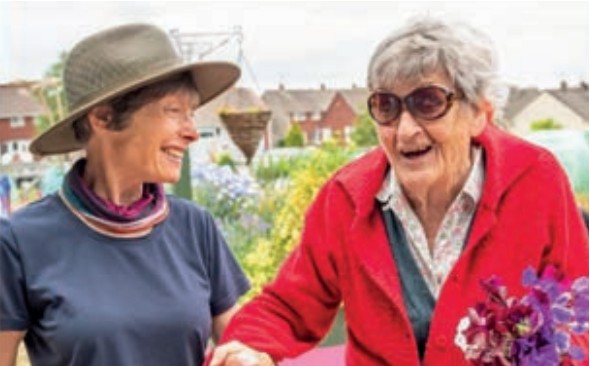
Alive, a charity providing a range of life-enhancing activities for older people, has published their Impact Report for 2024-2025. Alive say: “What a year it’s been for Alive. As always, we’ve continued to bring joy to thousands of older people – both in care homes and throughout the community. We celebrated our 15 Year Anniversary and had a new Chair of Trustees. We opened another hospital garden plus a second allotment. And we’ve seen this incredible work reach millions of people through huge media coverage.
Read Alive’s Impact Report 2024-2025 here: https://aliveactivities.org/wp-content/uploads/2025/10/Alive-Impact-Report-24-25.pdf
People living with dementia are mascots for ‘Alzheimer’s Society International’ football match
People living with dementia walked out alongside the England and Wales men’s football teams for the friendly the two countries played at Wembley on 9 October 2025.
Named the ‘Alzheimer’s Society International’, this fixture is the fourth of its kind since a partnership was established between the Alzheimer’s Society and The Football Association (English FA) in 2021. The initiative also included Wales players returning to the pitch after half-time without their names on their shirts, aiming to highlight memory loss as a symptom of dementia.
Noel Mooney, Chief Executive of the Football Association of Wales, says, “By walking out with fans living with dementia, we send a clear message that nobody should face dementia alone. It takes a united team, on and off the pitch, to provide the care, compassion and understanding needed to support those affected by this condition.”
Dementia UK launch Admiral Nurse Clinic to support Black, African and Caribbean communities
Dementia UK has launched an Admiral Nurse Clinic to support Black, African and Caribbean communities.

Admiral Nurses Mutsai Hove Bird and Safia Seini are leading the service. Mutsai says: “Working alongside my colleague Safia, I am humbled by the opportunity to provide specialist dementia advice, support and guidance to people from Black, African and Caribbean communities who are living with dementia, their family members and carers. There are many unique challenges that people affected by dementia from Black, African and Caribbean communities might face, including the various perceptions of what the condition is. I look forward to offering families in these communities a trusted space to access person-centred, culturally sensitive dementia advice and support.”
The clinics, via free video calls or telephone calls, run every Tuesday and Thursday and appointments can be booked on the Dementia UK website.
Read more from Safia, in conversation with Elene (whose mum lived with dementia), here: https://www.dementiauk.org/information-and-support/stories/elene-and-safias-story/
Updated ‘Understanding Dementia’ Massive Open Online Course now available
The University of Tasmania Wicking Dementia Research and Education Centre has launched an updated version of their ‘Understanding Dementia’ Massive Open Online Course (MOOC). This course is free to complete, always open and self-paced. It is aimed at a range of individuals, from people with lived experience of dementia to professionals. The course content includes the voices of lived experience throughout.
The Wicking Dementia Centre also offers a ‘Preventing Dementia’ MOOC. Find out more here: https://mooc.utas.edu.au/course/20296
Exeter Dementia Action Alliance to close
It’s been announced that the Exeter Dementia Action Alliance (EDAA) will formally close at the end of December 2025. Founded by Gina Awad BEM in 2014, the Exeter Dementia Action Alliance has achieved many milestones, including delivering over 500 dementia information sessions in schools, shops, care homes, GP surgeries, businesses, and community spaces across Exeter. The EDAA has also created art projects, memory sharing events and awareness campaigns. Through the Alliance, Gina spent six years working with the late cartoonist Tony Husband, including on calendars that were distributed worldwide.
Gina says: “While this chapter of the Alliance closes in December, my commitment remains steadfast. I will continue to host my voluntary radio show, Living Better with Dementia and my Dementia Consultancy & Advocacy work where I will carry forward the compassion and presence that has guided me through this work.”
Ron Coleman has died
Ron Coleman’s death has been announced by his wife, Karen. In her statement on 19 October 2025, Karen says:
“My beautiful warrior husband Ron Coleman died this morning peacefully in his sleep. He fought hard all of his life, mostly for other people and for himself. Always there for whoever needed him.” Ron had many talents including as a playwright, poet, dancer, painter and dementia advocate and activist. Ron’s legacy includes creating the first Scottish Dementia Arts Festival in Inverness in 2023, writing ‘Dementia the Musical’ (a show about dementia activism that toured theatres across Scotland), and being the Chair of The Board of Deepness Dementia Media, an organisation that is run by people with dementia for people with dementia. Listen to Deepness Dementia Radio here: https://www.deepnessdementiamedia.com
Read more about Ron here: https://www.thecourier.co.uk/fp/lifestyle/health-wellbeing/5338963/dementia-activism-scotland-stirling/
See also De-Notes in this issue.
Consultation on Liberty Protection Safeguards coming in 2026
The Department for Health and Social Care (DHSC) has announced that they will launch a consultation on Liberty Protection Safeguards (LPS) in the first half of 2026.
Currently, the Deprivation of Liberty Safeguards (DOLS) system is in place, but is considered by the DHSC to be, “bureaucratic and complex”, which is leading to, “poor understanding and application of the law by professionals, unacceptable distress for families and a backlog of 123,790 individuals, putting pressure on the social care system.”
The consultation will seek the views of families, carers and practitioners including social workers, nurses, psychologists and occupational therapists. It will be jointly run by the Department of Health and Social Care and the Ministry of Justice. Stephen Kinnock MP, Minister of State for Care, says: “There is currently a shameful backlog of unprocessed cases under the current system, which means that people’s rights are not being protected. At the same time, we know that many people in the system and their families find these intrusive assessments distressing. This is about ensuring we are fully focused on the most vulnerable people in our society and their families – understanding their needs, ending the maze of referrals and paperwork, and delivering the best protections and safeguards possible.”
You can find out more here: https://www.gov.uk/government/news/improved-safeguarding-and-protections-for-vulnerable-people
Technology news
UK Government announce investment in technology for mental health
UK Government announce investment in technology for mental health

The UK Government has announced, through Innovate UK (the UK’s national innovation agency), that £3.6 million will be invested in next-generation digital therapeutics for people living with moderate to severe mental health conditions. The funding will be shared by 17 businesses across the UK, all of whom will be developing and trialling technologies over the next 12 to 18 months that are potentially scalable for widespread impact.
One of the technologies to receive funding is CrossSense’s smart glasses, which use AI to reduce memory loss from illnesses like depression, anxiety and psychosis. The glasses recognise items in the person’s environment and offer advice on an app they are connected to.
The UK Government says of these smart glasses:
“Technology led by CrossSense helps to reframe negative thoughts while offering step-by-step instructions for carrying out daily tasks, such as keeping vulnerable users safe from harm with prompts like advice to stay away from boiling water on the hob. It adapts to the wearer’s needs over time and helps to prevent cognitive decline, including dementia, so complex mental health conditions are not an unnecessary barrier to fulfilled and independent lives.”
Find out more from UK Research and Innovation here: https://www.ukri.org/news/innovate-uk-invests-in-digital-solutions-for-mental-health/
Read more from the UK Government here: https://www.gov.uk/government/news/smart-glasses-and-ai-filter-apps-among-new-tech-to-transform-the-mental-health-of-millions
Find out more about CrossSense here: https://crosssense.com
NHS App introduces family access feature
The NHS App has introduced a family access feature, enabling users to add other profiles to their app account to manage the health needs of relatives they are caring for who are registered at the same GP practice. Verification checks are done through national NHS systems and via the GP practice before access is granted. Once enabled, a user can switch between their own and a relative’s profile, enabling them to book GP appointments, order repeat prescriptions or access medical information like care plans for a person they care for (where this has been approved by the GP practice). The family access feature is currently being piloted in 68 GP practices, with almost 12,000 people already signed up to this service. The NHS plans to extend this feature of their app more widely from next year.
Find out more about the NHS app here: https://www.nhs.uk/nhs-app/
Board game launched to help teach children about dementia
The Dementia Explorer Game has been launched by the Lewy Body Society. Created by a team led by Dr Clarissa Giebel, Senior Research Fellow at the University of Liverpool’s Institute of Population Health – in collaboration with The Lewy Body Society – it follows on from Dr Giebel’s work developing the Dementia Inequalities Game (that we reported on here: https://journalofdementiacare.co.uk/dementia-board-game). The game is for children aged 7-11 and aims to raise awareness of dementia by encouraging understanding and compassion from childhood onwards.
Watch a film about the creation of the game here: https://youtu.be/E0OmIpsjNn0?si=fmavtSIsYExLlfme
Listen to Dr Giebel on the Original Ideas podcast here: https://www.liverpool.ac.uk/research/original-ideas/dementia/
Buy The Dementia Explorer game here: https://www.lewybody.org/product/the-dementia-explorer-children-board-game/
‘Better Security, Better Care’ programme for adult social care providers in England secures funding
The Department of Health and Social Care (DHSC) has confirmed £21m for the continuation of the ‘Better Security, Better Care’ programme. The renewed grant covers the next three and a half years, to March 2029, and will extend support for adult social care providers across England to strengthen their data protection and cyber security capabilities.
Michelle Corrigan, Programme Director of Better Security, Better Care, says: “Data protection and cyber security are essential to safe, high-quality care, and this next phase is about moving beyond compliance with the DSPT (Data Security and Protection Toolkit) to genuine implementation of good practice in day-to-day operations.
With this renewed funding, we can continue to build on the strong progress already made. Our local support organisations play a vital role in reaching providers across the country, helping them develop the confidence and capability to manage data safely and securely.”
Find out more about Better Security, Better Care here: https://www.digitalcarehub.co.uk/data-protection-and-cyber-security/better-security-better-care/
Dementia-friendly smart homes – evaluating the Minder programme
The UK Dementia Research Institute Centre for Care Research and Technology is developing smart homes – intelligent environments that combine digital technology and artificial intelligence to deliver personalised care in the homes of people living with dementia. The flagship programme, the Minder platform, is integrated with an NHS team to enhance clinical care. The Minder platform uses a range of home sensors to collect environmental, physiological and activity data in detail and in real time. AI is trained to identify clinically important events and provide alerts to a clinical monitoring team, who provide support, with Minder informing their clinical and care decisions. Minder is currently in its pilot stage, in around 100 people’s homes, supported by a clinical monitoring team in the NHS. Data from more than 30,000 days has been collected, demonstrating Minder’s acceptability and technical feasibility in a range of home environments.
Working in partnership with people living with dementia and caregivers, the Centre is undertaking a two-year study to prepare Minder for integration with the NHS and social care services. The team is working with people living with dementia and their caregivers to co-design a new service model for Minder-NHS integration.
Research news
Dementia Carers Count launch their 2025 Dementia Carers Survey
Dementia Carers Count have launched their 2025 Dementia Carers Survey. They would like to hear from anyone caring for someone with dementia to understand the different challenges individuals are facing. All responses will shape the support Dementia Carers Count provides to family dementia carers, and the survey findings will also inform the charity’s campaigning work.
For more information and to access the survey (or request a paper version of the survey), please visit: https://dementiacarers.org.uk/news/take-part-in-our-2025-carer-survey/
The survey closes on the 14 December 2025.
New study investigates the link between hearing loss and Alzheimer’s disease
A new study – The Auditory Biomarkers of Healthy Ageing and Alzheimer’s Disease (ABHAD) study – being conducted by Dr Jenna Littlejohn from the University of Manchester and Dr Ross Dunne from Greater Manchester Mental Health NHS Foundation Trust, is investigating the link between hearing loss and Alzheimer’s disease.
The study is aiming to find out why people with Alzheimer’s often have hearing problems, and whether detecting changes in hearing earlier could help to spot Alzheimer’s sooner.
Read an interview with Dr Jenna Littlejohn to find out more, including how to get involved in this study: https://news.joindementiaresearch.nihr.ac.uk/hearing-loss-and-alzheimers-disease/
Top ten research priorities for co-existing dementia and hearing conditions published
Following a survey the James Lind Alliance Priority Setting Partnership (PSP) launched in July 2024 the top ten research priorities for co-existing dementia and hearing conditions has been agreed upon and published in the Age and Ageing Journal. Dr Sian Calvert, Research Fellow, NIHR Nottingham Biomedical Research Centre, says:
“Many people living with dementia can also have hearing conditions (e.g. hearing loss, tinnitus, hyperacusis, balance problems). The symptoms of dementia and hearing loss can be similar (e.g. communication difficulties), making diagnosis and management challenging. Research indicates a possible link between untreated hearing loss and dementia, though the relationship is not yet clear. Many important research questions about dementia and hearing conditions remain unanswered. To address this, a James Lind Alliance Priority Setting Partnership (PSP) for co-existing dementia and hearing conditions was launched, coordinated by the NIHR Nottingham BRC and University of Nottingham, in collaboration with Alzheimer’s Research UK and RNID. Over 18 months, 500+ people with a personal or professional interest in dementia and/or hearing conditions shared their thoughts on what research is most needed about co-existing dementia and hearing conditions. In September 2024, the top 10 research priorities were agreed upon at a final workshop – you can view these here: https://academic.oup.com/view-large/525004774.”
Read the full article in Age and Ageing here: https://academic.oup.com/ageing/article/54/7/afaf191/8187505?searchresult=1&login=false
Blood biomarker trial underway in the ADAPT study
Following in the footsteps of the READ-OUT study, the ADAPT study – which focuses on measuring one of the proteins associated with Alzheimer’s disease, p-tau217, in the blood – has launched its trial. 1100 people are being recruited from memory clinics across the UK, with an emphasis on ensuring diversity in geographic, ethnic and economic backgrounds . Half of the study participants will have their blood test results within three months of being assessed by their memory service, while the other half will receive their results after 12 months. The aim is to see if the test results speed up diagnosis and treatment decisions.
More from University College London (UCL) here: https://www.ucl.ac.uk/news/2025/sep/uk-trial-launches-transform-alzheimers-diagnosis-simple-blood-test
Read more about the Blood Biomarker Challenge here: https://journalofdementiacare.co.uk/blood-tests-to-detect-dementia
Find out more about the READ-OUT study here: https://journalofdementiacare.co.uk/additional-funding-for-read-out-study-and-call-to-get-involved
Study links multiple mental health conditions with an increased risk of developing dementia
A study published in BMJ Mental Health has shown that people with multiple mental health conditions face an increased risk of developing dementia. Researchers found that people with two psychiatric conditions were twice as likely to develop dementia, whilst those with three had over four times the risk and with four or more psychiatric disorders the risk was up to eleven times greater.
Dr Marc Leclerc, lead author of the study, says:
“This is a crucial finding. It suggests that psychiatric comorbidity could act as an early warning sign of dementia and should not be overlooked in clinical practice.”
Read the study here: https://mentalhealth.bmj.com/content/28/1/1
Alzheimer’s Research UK publish ‘Seeing the unseen: Rethinking dementia diagnosis’
Alzheimer’s Research UK (ARUK) has published a new report entitled, ‘Seeing the unseen: Rethinking dementia diagnosis’. The content in this report is informed by work Alzheimer’s Research UK did during 2024 and 2025 with over 500 people affected by dementia and more than 160 healthcare professionals working in NHS dementia services.
Findings include:
- Fewer than a third (27%) of healthcare professionals felt current diagnostic pathways are fit for purpose.
- One in five people (22%) were still waiting more than two years for a diagnosis after visiting their GP for help.
- More than nine in ten (94%) of healthcare professionals would welcome improvements to the diagnostic pathway.
Study links alcohol use to an increased risk of developing dementia
A study published in BMJ Evidence-Based Medicine has suggested that alcohol use, even at moderate levels, may have no safe threshold when it comes to brain health.
Researchers from The University of Oxford, Yale University, and the University of Cambridge combined observational data from more than half a million participants in the US Million Veteran Program and UK Biobank. Their findings have been described as the most comprehensive to date when it comes to looking at alcohol consumption and dementia risk.
You can read the study here: https://ebm.bmj.com/content/early/2025/09/16/bmjebm-2025-113913
Join Dementia Research share film for South Asian communities
Join Dementia Research has shared a film encouraging people of South Asian heritage to take part in dementia research. Join Dementia Research say:
“Representation in research is crucial to ensure that everyone affected by dementia has access to the right treatments, care and support. Hear from people affected by dementia and a researcher as they share their experiences and explain why taking part in research is so important. Your involvement can help support dementia research to make a difference for future generations.”
Watch the film here: https://youtu.be/5haxXVsDRXQ?si=ejnhMoy1fzz-zWao
Alzheimer’s Research UK publish Wave 4 of the Dementia Attitudes Monitor
Alzheimer’s Research UK (ARUK) has launched Wave 4 of the Dementia Attitudes Monitor.
The Dementia Attitudes Monitor is a biennial survey, first introduced in 2018, that tracks how people in the UK think and feel about dementia. The survey asked over 2,000 people questions including:
What do you think increases someone’s risk of dementia?
How likely would you be to seek a formal diagnosis, and how comfortable would you be telling someone you have dementia? How effective do you believe current treatments are?
Findings include: One in two fear developing dementia more than any other condition. Attitudes to getting a dementia diagnosis vary by ethnicity and age.
A cure for dementia remains the top research priority.
See more findings here: https://dementiastatistics.org/attitudes/