
A Familiar Voice: implementing Simulated Presence Therapy (SPT) into care home settings across County Durham and Darlington.
Megan Holden explains how a systematic approach using recorded messages from families can help address behavioural expressions of need for people with dementia living in care homes.
Author Details
Megan Holden was a Clinical Associate Psychologist working for Tees, Esk and Wear Valley NHS Foundation Trust in a Care Home Liaison service, supporting people living with dementia who presented with behavioural expressions of need. She is passionate about non-pharmacological, person-centred approaches to dementia care and now works as a Psychological Wellbeing Advisor at Durham University.
Summary
People living with dementia in care homes may display distress or behavioural expressions of need when their attachment needs are unmet. Some can present with attachment-related behaviours, such as calling out, searching for a particular person, following staff, or becoming distressed when separated from someone important to them. Simulated Presence Therapy (SPT) is a low-cost non-pharmacological intervention, that uses personalised audio or video recordings of family members or other people close to them to simulate their presence. This familiar voice and message can provide reassurance, comfort, and a sense of safety.
This article describes the implementation of SPT within a Care Home Liaison (CHL) team supporting 116 care homes. Residents showing attachment-related behaviours had a psychology assessment and formulation to guide care staff in understanding the residents’ needs that may be driving their behaviours. Families were supported to create short, meaningful recordings, which were then used in daily care during times of distress. Residents’ responses were monitored over a 2–3-week period, with adjustments made as needed.
Case examples demonstrate that SPT can reduce behavioural expressions of need, improve quality of life, and increase staff confidence in supporting residents. Key learning included the importance of family involvement, personalised content, staff engagement, and ongoing monitoring. The approach also aligns with wider evidence for non-pharmacological interventions within care home liaison services. Overall, SPT offers a practical, attachment-informed approach that can meaningfully improve the wellbeing of people living with dementia in care home settings.
Introduction
People living with dementia in care home settings may present with distress or behavioural expressions of need when their underlying needs are not met. Some residents can present with attachment-related behavioural expressions of need, such as: calling out, repeatedly asking or searching for a particular person, following staff or clinging onto other residents, or becoming unsettled when separated from a trusted person. These behaviours can be understood as attempts to seek comfort, reassurance, connection and a sense of safety.
Bowlby’s Attachment Theory (Bowlby, 1969) explains that people naturally look for comfort and reassurance from those they are closest to, especially when they feel worried, confused or unsafe. Although attachment is often discussed in relation to children, attachment needs continue throughout adulthood. This need for closeness and security does not disappear with age or when individuals are living with dementia. Many people living with dementia continue to rely on familiar voices and relationships to feel safe, even if they are no longer able to explain or communicate this directly.
Simulated Presence Therapy (SPT), developed by Woods and Ashley (1995), is based on this theory. This intervention uses personalised recordings from family members or other important attachment figures for the person living with dementia to recreate a sense of closeness. The aim of SPT is to meet the attachment needs of a person living with dementia by simulating the presence of someone they trust.
Hearing a familiar voice can provide reassurance, create a sense of connection and safety, and help reduce feelings of anxiety and attachment-related behaviours for those living with dementia. By helping the person feel safer and less distressed, SPT can also help reduce resistance to personal care interventions and can increase participation (O’Connor et al, 2011). SPT is one example of a non-pharmacological intervention often used by care home liaison teams to support residents living with dementia (Marshall and Thwaites, 2024).
Referral pathways and identifying residents
I work as part of a Care Home Liaison (CHL) team, which is a multi-disciplinary service supporting 116 care homes across County Durham and Darlington. The team provides specialist assessment and intervention for care home residents living with dementia and / or complex mental health needs whose behavioural expressions of unmet need are challenging for care staff.
When a resident displays attachment-related behaviours such as calling out and / or searching for a specific person or becoming distressed when separated, they are referred by their Community Mental Health Nurse (CPN) or other members of the team for psychological assessment. A psychological formulation is then developed to help care staff understand the underlying needs driving the behaviour.
SPT is considered as a potential intervention when attachment needs appear to play a significant role. We use recommended criteria (Zetteler, 2008) to determine suitability. SPT works best for residents who:
- have moderate to severe dementia and are unable to retain the content of the recording, allowing the message to feel familiar and reassuring each time it is played, rather than repetitive or distressing if they remember having already heard it;
- do not have a significant hearing impairment;
- can understand basic spoken information;
- previously had a close, positive relationship with the person making the recording.
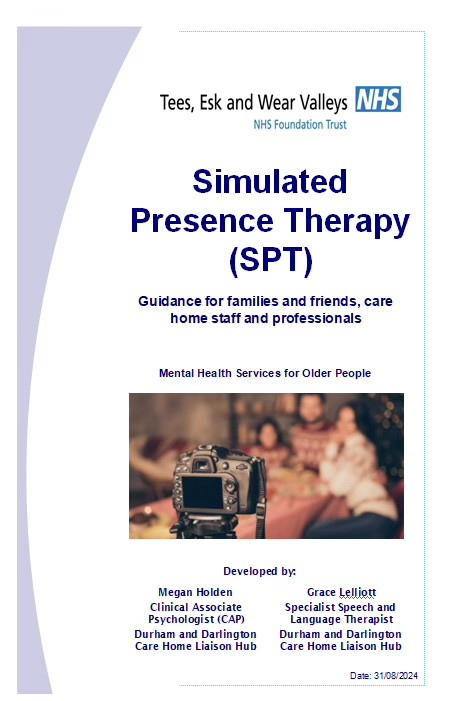
If a resident meets the recommended criteria, care staff are given an explanation of what SPT is, how it works, and its purpose. If staff feel the intervention is appropriate, families are contacted to introduce the idea and gain consent. Both family members and care staff receive an information leaflet about SPT (see Image 1). A collaborative decision is then made about whether a video or audio recording would be most suitable, considering the residents’ needs, including their visual abilities.
Working with families to develop SPT recordings
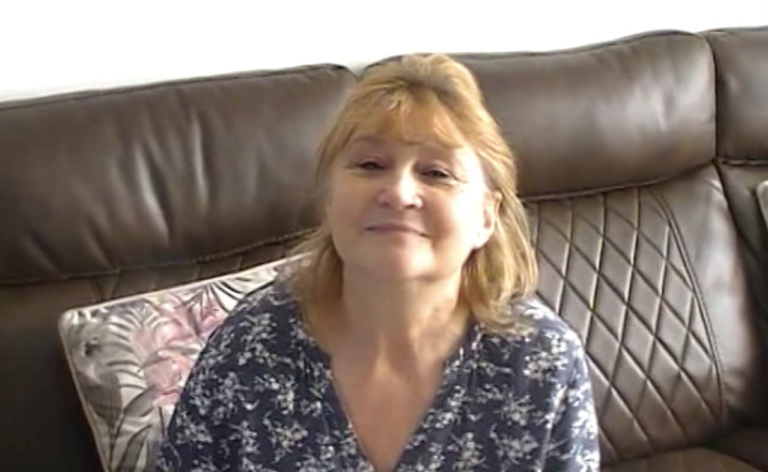
Families are supported to create several short, personalised audio or video recordings, which are then edited into a single seamless recording. Recordings are often made in the relatives’ home so that the background is familiar as well as allowing for the family member to make use of items in the home during the recording, for example, photographs or pets. Families are encouraged to include familiar greetings, meaningful memories, reassuring statements and expressions of affection in a style and tone that their loved one would recognise. Recordings are typically 3-5 minutes long to give the resident time to settle and engage without losing attention. The recordings are deliberately vague; for example, the family relative will state they will be in to see them ‘soon’ rather than giving a specific time, to ensure that the recording can be used both day and night.
Image 2 below is a screenshot of an SPT video recording of a resident’s daughter providing reassurance and familiar messages to support her mother during periods of distress.
Key Points
People living with dementia may show attachment-related distress when they feel unsafe or separated from familiar people.
Simulated Presence Therapy (SPT) is a personalised non-pharmacological intervention that uses recorded messages from family members to provide comfort and reassurance.
SPT will be of interest to care home staff, psychologists, occupational therapists, nurses, and other individuals working with people living with dementia who are seeking practical, non-pharmacological approaches to responding to attachment-related distress and behavioural expressions of need.
A clear psychological assessment and formulation helps identify when attachment needs are driving behavioural expressions of need.
Family involvement and personalised content are crucial for effectiveness.
Staff engagement, training, and monitoring help successfully embed SPT into daily care.
SPT is a low-cost, non-pharmacological intervention that can reduce distress and improve quality of life.
Implementing SPT in practice
Once the recording is developed, an initial visit is arranged to introduce the recording to the resident and observe their response. It is often framed as a message from their loved one. For video-based SPT, recordings are often played via a DVD player, usually in the resident’s bedroom, while audio recordings are often played using an MP3 player and headphones. However, both audio and video recordings can also be created and played back using devices such as tablets or iPads, depending on the resources available and the resident’s needs. Care staff are encouraged to be present during this visit to build their confidence.
Care home staff receive guidance and a demonstration about when and how to use the recording, based on the psychological formulation. This may include using SPT during specific times of the day when the resident is typically distressed or when they are searching for their attachment figure.
Monitoring response
Care home staff monitor the resident’s response to the recording over a 2–3-week period, noting changes in mood, distress or behavioural expressions of need. Feedback is then shared with the psychology team and the intervention is adjusted as needed. This may include editing the content of the recording, developing a further recording for staff to rotate between, altering the timing of its use or discontinuing SPT if it is not effective. Regular feedback is then provided to the family member.
Financial considerations
SPT is a low-cost intervention. Most care home residents already have access to a TV in their bedroom, and DVD players can be purchased easily for a low cost to play video recordings. MP3 players and headphones can also be purchased for a low cost to play audio recordings. Once the recordings are created, they can be reused multiple times. Overall, SPT is a cost-effective way to provide personalised, attachment-based support without significant financial costs.
Case Study N
N was a female resident with a diagnosis of mixed dementia and a history of anxiety and depression. She was referred for a psychology assessment and formulation by her CPN as care home staff were finding her behavioural expressions of need challenging. N could shout, wander, and repeatedly ask to go home / to see her daughter.
N had a psychology assessment and team psychological formulation involving care home staff, her daughter, her CPN, and the CHL team. It was identified that N had a strong attachment to her daughter, and they had always been close throughout her life, were best friends, and confided in each other. N’s daughter visited often, and N was noticeably more settled during her visits and for a period afterwards. During the psychological formulation meeting, it was collaboratively agreed that N’s daughter would create a Simulated Presence Therapy (SPT) recording for staff to play to N when she was distressed.
The CHL team supported N’s daughter to develop a personalised and appropriate recording. N had access to a TV in her bedroom, and the CHL team provided N with a DVD player to watch her SPT recording. Care home staff were then advised to play the SPT recording when N was distressed and asking for her daughter.
Evaluation and outcome
At the time of referral, N’s Challenging Behaviour Scale (CBS) (Moniz-Cook et al, 2001) score was 111 and her Quality of Life in Late-Stage Dementia (QUALiD) (Weiner et al, 2000) scale score was 36. These scores indicated a high level of challenge for care home staff and high levels of distress / low quality of life for N.
Following CHL team assessment, formulation and non-pharmacological interventions to meet her unmet needs, N’s CBS score reduced to 12 and her QUALiD score reduced to 14. This change indicates a reduction in behavioural expressions of need that care staff found challenging and an improvement in staff’s ability to manage these behavioural expressions from pre- to post-intervention. It also indicates an improvement in N’s quality-of-life post-intervention.
Care staff found the intervention so effective that they requested a further video recording of the daughter so that they could alternate between the two recordings to maintain effectiveness.
Case Study J
J was a female resident with a diagnosis of Alzheimer’s Disease. She presented with poor short-term memory and experienced significant anxiety related to her family, frequently seeking reassurance from both staff and relatives. She also had macular degeneration and was registered as partially sighted.
J was initially assessed by occupational therapy (OT), who identified potential unmet attachment needs. J had remembered that one of her sons was unwell and she was unable to speak to him due to this, which increased her distress. Care staff also observed that J appeared noticeably calmer when her other son visited, who regularly offered reassurance. Based on these concerns, the OT referred J for a psychologically informed assessment and formulation to explore the attachment-related needs driving her anxiety and to consider whether SPT would be appropriate.
Following psychology assessment and formulation, attachment-related needs were identified as a key factor contributing to J’s presentation. SPT was recommended as an intervention. Due to J’s visual impairment, a personalised audio recording was chosen. The CHL team supported J’s son to develop the recording, including reassuring messages and reminiscence about meaningful memories. Care staff were advised to play the recording during periods of distress, particularly when J became anxious about her unwell son.
Evaluation and outcome
Staff reported that J was significantly calmer when the recording played and for a period after listening to the recording. At initial referral, J’s Challenging Behaviour Scale (CBS) score was 152, indicating high level of challenge for care home staff. Following CHL team assessment, formulation and the implementation of SPT alongside other non-pharmacological interventions, including recommendations on the staff approach, J’s repeat CBS score reduced to 12. This significant reduction also reflects improved staff confidence in meeting J’s needs and reducing her distress.
Case Study M
M was a female resident with a diagnosis of mixed dementia. She presented with significant distress and was resistant when being supported with her personal care. M could be physically aggressive towards staff during this time and was only accepting support from her husband.
M was initially assessed by occupational therapy (OT), who identified potential unmet attachment needs, and that M was feeling unsafe at these times. Based on these concerns, the OT referred M to psychology for an assessment and formulation to explore the attachment-related needs driving her distress and to consider whether SPT would be appropriate to reduce her distress during personal care interventions.
Following psychology assessment and formulation, attachment-related needs were identified as a key factor contributing to M’s presentation, so SPT was recommended. The CHL team supported M’s husband to develop a personalised video recording, including reassuring messages that could be played to M when staff supported her with personal care.
Evaluation and outcome
At the time of referral, M’s Challenging Behaviour Scale (CBS) score was 134 and her Quality of Life in Late-Stage Dementia (QUALiD) scale score was 41. These scores indicated a high level of challenge for care home staff and high levels of distress / low quality of life for M.
Following care home liaison assessment, formulation and non-pharmacological interventions to meet her unmet needs, M’s CBS score reduced to 21 and her QUALiD score reduced to 25. This change shows a reduction in behavioural expressions of need that care staff found challenging and an improvement in staff’s ability to manage these behaviours from pre- to post-intervention. It also indicated an improvement in M’s quality-of-life post intervention.
Care staff reported that the video recording had been very effective with reducing M’s resistance and distress with being supported with personal care interventions. Care staff continued to play the recordings at these times, when husband was not present.
Lessons learned
Family involvement is key, as recordings are most effective when they feel warm, familiar and authentic. Personalisation also matters: the content, length, and delivery method of recordings should be tailored to each resident’s abilities and needs. Staff engagement is crucial, with clear guidance, demonstrations, and ongoing support helping care staff feel confident in implementing SPT in daily care. Monitoring and adaptability are important, as residents respond differently to the intervention; some recordings may need to be adapted, or additional recordings developed for rotation to maintain effectiveness over time. Despite its low cost, SPT can have a meaningful impact on residents’ quality of life, wellbeing, and behavioural expressions of need.
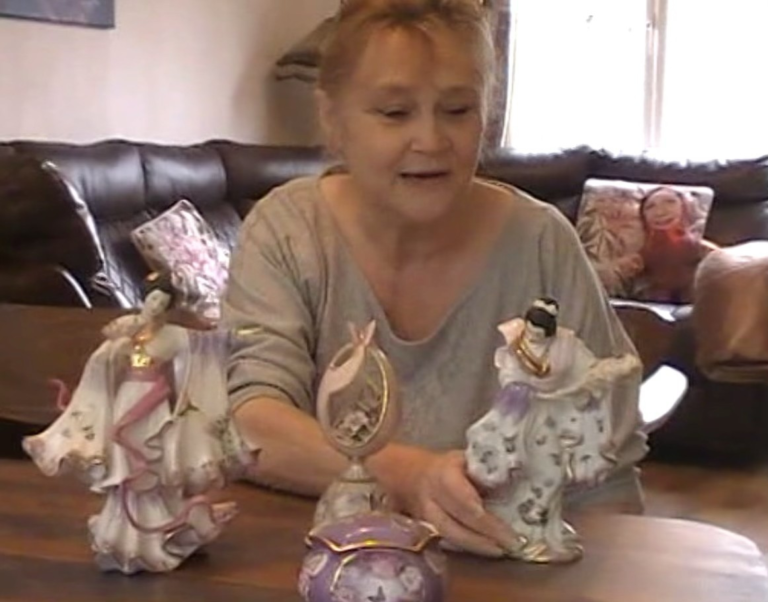
Image 3 below is a screenshot of an SPT video recording of a resident’s daughter showing familiar and personalised items to her mother to promote reminiscence, reassurance, and a sense of connection.
Future plans
The Care Home Liaison team plans to continue evaluating the longer-term outcomes of SPT, particularly its impact on residents’ quality of life and behavioural expressions of need. We also aim to expand access for residents who may benefit from this intervention. This includes exploring its use alongside other attachment-informed and non-pharmacological interventions.
Conclusions
Simulated Presence Therapy is a practical and person-centred approach for supporting residents living with dementia who experience attachment-related distress. By using familiar voices and personalised messages, SPT can help meet attachment needs, improve quality of life, and reduce behavioural expressions of need by promoting feelings of safety and connection. When guided by psychological formulation and delivered in partnership with families and care staff, SPT is an effective non-pharmacological intervention that can make a meaningful difference to the lives of people living with dementia in care home settings.
Acknowledgements
The author would like to thank the residents, family members, and care home staff who supported the implementation of Simulated Presence Therapy (SPT), and colleagues within the Durham and Darlington Care Home Liaison Team for their collaborative work in delivering person-centred, non-pharmacological interventions. Special thanks go to the family members who gave consent to share their experiences for educational purposes and who contributed to the development of personalised recordings to support their loved ones.
References
Bowlby, J. (1969) Attachment and Loss. New York: Basic Books.
Marshall, J. and Thwaites, S. (2024) ‘Non-pharmacological Prescribing in a Care Home Liaison service’, Journal of Dementia Care, 32(5), pp. 30–34.
Moniz-Cook, E. et al. (2001) ‘The Challenging Behaviour Scale (CBS): development of a scale for staff caring for older people in residential and nursing homes’, British Journal of Clinical Psychology, 40(3), pp. 309–322. Available at: https://doi.org/10.1348/014466501163715
O’Connor, C.M. et al. (2011) ‘Using video simulated presence to reduce resistance to care and increase participation of adults with dementia’, American Journal of Alzheimer’s Disease & Other Dementias, 26(4), pp. 317–325. Available at: https://doi.org/10.1177/1533317511410558
Weiner, M.F. et al. (2000) ‘The Quality of Life in Late-Stage Dementia (QUALID) scale’, Journal of the American Medical Directors Association, 1(3), pp. 114–116.
Woods, P. and Ashley, J. (1995) ‘Simulated presence therapy: using selected memories to manage problem behaviours in Alzheimer’s disease patients’, Geriatric Nursing, 16(9), pp. 417–421. Available at: https://doi.org/10.1016/S0197-4572(05)80072-2
Zetteler, J. (2008) ‘Effectiveness of simulated presence therapy for individuals with dementia: a systematic review and meta-analysis’, Aging & Mental Health, 12(6), pp. 779–785. Available at: https://doi.org/10.1080/13607860802380631
Holden, M. (2026) ‘A Familiar Voice: implementing Simulated Presence Therapy (SPT) into care home settings across County Durham and Darlington’, Journal of Dementia Care, 34(4) pp. 18-21.