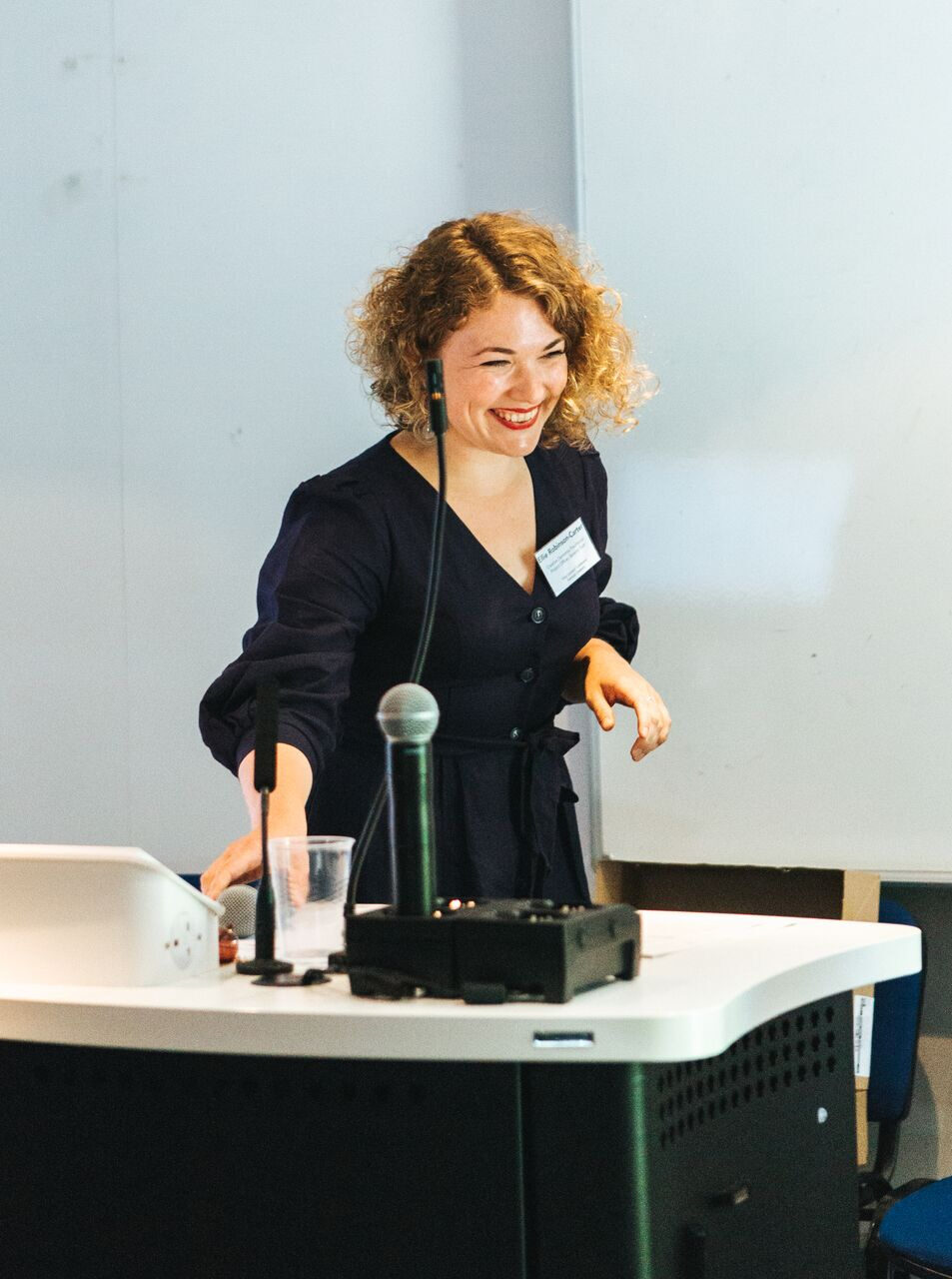
A narrative review exploring the role of co-production in dementia practice and research Pres Proposal Title Pres Proposal Content The concept of co-production, initially coined by Elinor Ostrom in the 1970s, has since evolved to encompass diverse fields including education, public policy and health and social care. In dementia care and research, co-production is a way to empower those with lived experience, yet its definition and implementation remain inconsistent. This review explores the development, principles and challenges of co-production in the context of dementia, with a particular emphasis on safeguarding its integrity. The term co-production is often used interchangeably with other terms, e.g. co-creation and co-design, therefore, we draw on our definition that was developed with lived experts, researchers, and community partners in the EMPOWER Dementia Network+: A collaborative approach that prioritises equity, shared power and shared responsibility among all participants in a safe space. It ensures the ongoing involvement of diverse and inclusive groups, especially those directly affected, from the outset. Our process of creating this definition reflects our belief that co-production is not limited to a single phase of a project but embedded throughout, shaping both how we work and what we produce. Through a narrative exploration of the journey of co-production – from visioning and planning to delivery and outcomes – we highlight what meaningful co-production looks like in practice and research. We explore the challenges and barriers that are so often faced – including digital and geographical exclusion, inaccessible language, lack of training and resources – and suggest ways of overcoming these to ensure a meaningful and valuable experience for all involved. We also distinguish between in-person, online and hybrid delivery, offering considerations to make these spaces optimum for co-production. We assert the potential and true impact that co-production can have, and its ability to galvanise research into new realms. The review also draws on real examples of co-production, including a reflection by the co-authors on their experience of writing together as two researchers and one lived expert. The paper concludes with a groundbreaking toolkit for lived experts, researchers and practitioners to utilise in future. Proposal Type — not set — Presentation: Presentations offered will usually be for 12 or (in selected cases) 18 minutes. Poster: We welcome posters for digital display at the Congress and on our website. Posters should describe a project. Workshop: We hope to include a small number of interactive workshops of either 30 or 70 minutes Mini-Presentation: A 3-minute silent video with in-person presenter Pres Prop Abstract In dementia care and research, co-production is a way to empower those with lived experience, yet its definition and implementation remain inconsistent. This review explores the development, principles and challenges of co-production in the context of dementia, with a particular emphasis on safeguarding its integrity. We draw on our definition that was developed with lived experts, researchers, and community partners in the EMPOWER Dementia Network+: A collaborative approach that prioritises equity, shared power and shared responsibility among all participants in a safe space. From visioning and planning to delivery and outcomes, we highlight what meaningful co-production looks like in practice and research. We explore the challenges and barriers that are so often faced e.g., digital and geographical exclusion, and suggest ways of overcoming these to ensure a meaningful experience for all involved. The paper concludes with a groundbreaking toolkit for lived experts, researchers and practitioners to utilise in future. Lived Experience This paper has been co-authored with Martin Robertson who has partaken in every step in writing this paper. Martin is a person living with dementia. Pres Prop EDI This paper is a part of the EMPOWER Dementia Network+, a network committed to working on excellent and inclusive dementia care particularly for people from underserved communities. The network's focus is on the supporting people with greater needs and those who have reached the critical point in care, whether formally or informally, and ensuring their voices are heard. As founder of The Photobook Project, Ellie Robinson-Carter (author) has extensive experience with working with people with dementia around the world. Alongside this, she managed the Creative Spaces project for 10 years which had a particular focus on creating accessible and meaningful experiences in nature for people with dementia. For more information, please visit https://ellierobinson-carter.com/. Video Clips Yes No Support to present Lead Presenter Name Lead Presenter Job Title Lead Presenter Organisation Lead Presenter Email Co-Authors and Organisations (if relevant) Lead Presenter Biography Ellie is a Creative Dementia Practitioner, Researcher and Consultant based in Plymouth (UK). Ellie is an expert in using creative practice to enable people with dementia and intergenerational groups to connect to themselves and others, fostering empathy, building belonging and challenging disconnection in our society. Ellie has 10 years experience of running Sensory Trust’s flagship dementia project Creative Spaces alongside her current role at The Photobook Project. Through her practice and research, Ellie is passionate about empowering the voices of people with dementia and showing what is still possible if the right frameworks, support and opportunities are created for individuals. Ellie’s research involves using creative methods – such as The Photobook Project – to empower people with dementia to share their perspectives and experiences. Ellie is currently undertaking a PhD at University of Hull with this focus, alongside her role as Programme Director for the MSc Dementia. She also consults on research projects related to dementia, intergenerational activity and older people. Lead Presenter Photo tQ_-Thlw.jpg Second Presenter Second Presenter Second Presenter Name Second Presenter Job Title Second Presenter Organisation Second Presenter Email Address Second Presenter Biography Laiba Ahmad is a Research Associate with the EMPOWER Dementia Network in the School of Medicine & Biosciences at the University of West London, focusing on advancing dementia care and outcomes. She holds an MSc in Clinical Mental Health Sciences from University College London, where she contributed to the DREAMS: START trial, gaining experience in dementia research. She also holds a BSc in Psychology from the University of Westminster, during which she completed a placement year at Cygnet Churchill, focusing on rehabilitation using dialectical behaviour therapy-based interventions. Laiba has worked on the Multi-Stakeholder Engagement to Promote Inclusive Research Practices project, enhancing collaboration and inclusivity in dementia research, particularly among minoritised and underserved groups. She has a strong interest in health inequalities and the intersection of psychology and technology. Second Presenter Photo Laiba.webp Third Presenter Third Presenter Third Presenter Name Third Presenter Job Title Third Presenter Organisation Third Presenter Biography Third Presenter Image