Family carers: Untrained, unpaid and unprepared?
Every family carer’s story is a variation on the same theme: once you choose to take-on full time care at home, be prepared to learn a whole new set of skills alongside emotional turmoil and a re-evaluation of your life-plans.
Nothing can prepare you for the enormity of the task and I wonder if the paucity of the depth and comprehensiveness of the advice for carers is because no one wants to encapsulate and say just how monumental this task really is. However, I hope this doesn’t put people off, caring is not only hard work, but it is also rewarding and fulfils our human desire to protect, advocate and manage the on-going health and welfare of a loved one.
Many people looking after a loved one don’t regard themselves as carers because the role of supporting a loved one comes automatically as part of a relationship or family responsibility. It’s important though to self-identify as a carer because this opens the door to all kinds of support. This includes, in some cases, financial support, and recognition by health and social care services that you have taken on a significant responsibility, and because of that, you as a carer, also need support. For example, priority for carers’ on-going health reviews through your GP.
The carer is not only administering comprehensive and loving support but can also become the critical manager of all the multiple statutory and formal providers of health and care services around their loved one. The role also includes planning and putting into place all the financial, legal and practical mechanisms to ensure on-going continuity of support as the person’s health evolves.
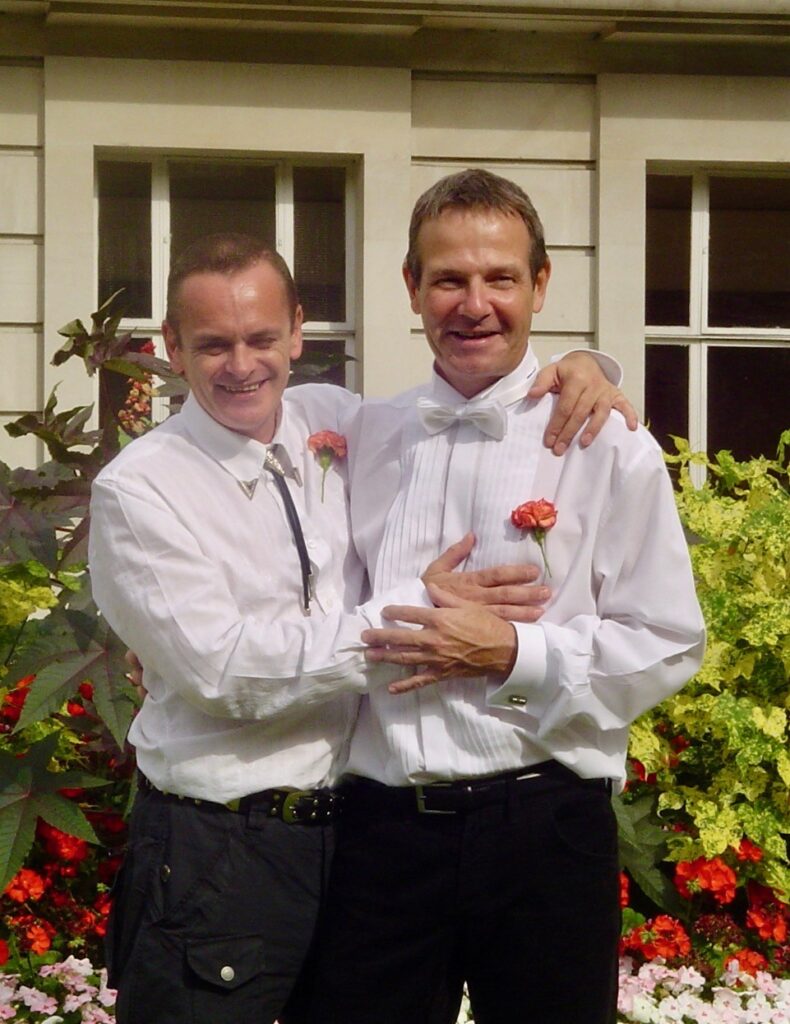
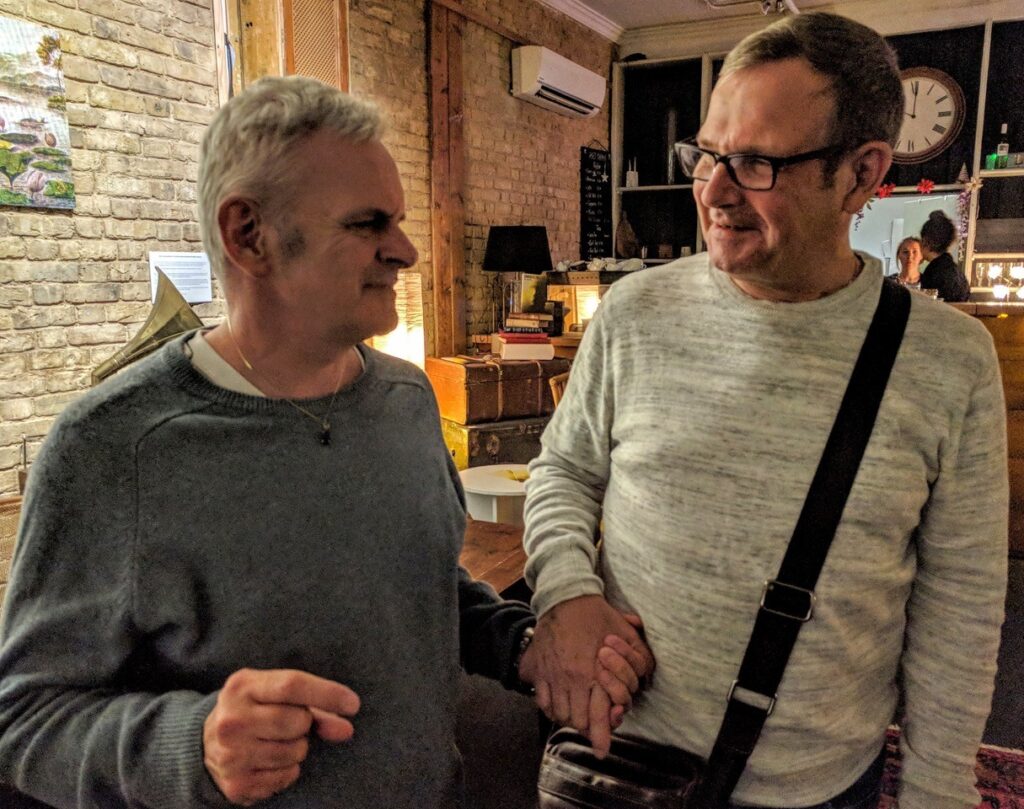
Mike Parish and Tom Hughes
Carers need to be very assertive in order to get the support that they and their loved one need. This will include pre-empting the future health needs of the person in order to get the right support in place, which is especially important for someone with dementia. There are very few people other than the neurological team who will understand the complexity and needs of a person with such a diagnosis. You as a carer will become a specialist advocate, which will entail learning and keeping up-to-date with the changing needs of the person as the illness progresses. Examples would include engaging a speech and language therapist, an occupational therapist and perhaps the community matron and their team among many, many others. Each will require an explanation of the person, the diagnosis and the specific impact that that has on them, and what is needed to maintain the highest possible level of care and well-being.
There’s no doubt at some stage the carer becomes the ‘expert’, despite the fact that too often the formal health and care providers may not recognise your authority and depth of knowledge. Here again, it requires an assertive approach to ensure the best outcomes for the person you’re caring for.
Caring is both a privilege and an esteemed undertaking. You deserve a medal.
Mike Parish
Carer for husband Tom Hughes
https://www.forbrian.co/mikeparish-tomhughes
Please note: Opinions expressed in this blog are the view of the author. Content was reviewed by our editorial panel, whose support we are very grateful for.
Do you want to write a blog for Dementia Community Voices?
You can view our submission guidelines here.
We want to hear from you!